How a News Background Paragraph Changes the Scale
Learn how a news background paragraph gives a new event useful context, where to place it and how to keep a short history from distorting the story.
Why can one report make an announcement feel like a sharp break while another places it in a long-running dispute? A news background paragraph changes the scale: it gives readers earlier events against which to understand the present one, without replacing the report of what has just happened.
A background paragraph connects the present to a specific earlier event
The paragraph earns its space when it helps readers understand a new development. It might explain why a decision has drawn attention, what an official term refers to, or how a current dispute differs from an earlier one. The connection should be explicit enough for readers to see why this past detail belongs in this report.
There is no single historical route by which newsrooms arrived at this form. Its use varies with the story, publication and format. The practical point is simpler: in a short space, a writer selects a few earlier details from a larger record. That selection can orient readers, but it cannot stand in for the full history.
Keep the event itself visible. A reader should not have to pass through a miniature history before learning what happened today.
Compression makes the choice of detail visible
A short paragraph cannot include every earlier decision, dispute or change. The writer has to choose a starting point and leave other material out. That choice shapes what readers see as relevant, so every detail should help explain the current development rather than merely give the passage an air of authority.
Try removing each historical detail in turn. If the current event becomes harder to understand, the detail may be doing useful work. If the paragraph still makes sense and only loses a flourish, consider cutting it.
Suppose a report concerns a new hearing in a local planning dispute. A concise background might mention the earlier planning decision and the appeal now being heard. Adding every meeting and objection could blur the reason for today’s hearing; leaving out the earlier decision could make it difficult to understand what is being appealed.
Sequence needs careful wording
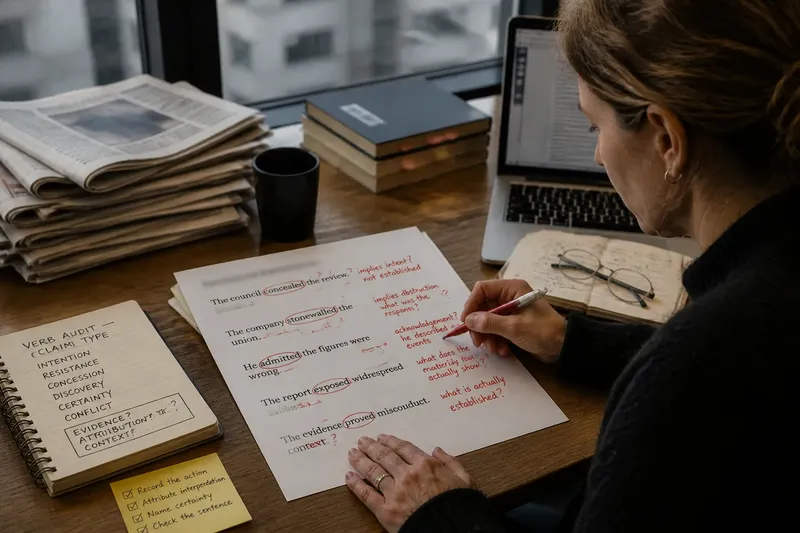
Chronology can suggest a connection even when the report has established only timing. “After” places events in sequence; “because of” claims a cause. “In response to” attributes a prompt. These phrases make different claims, so choose the one the reporting supports.
Imagine a council announces a review of a transport plan after residents object to it. Officials have not said what prompted the review. The background paragraph can state that the announcement came after the objections, then note that the council has not explained its reasons. That gives readers the sequence without turning it into a claim about motive.
A list of setbacks can also make a current decision look inevitable. Include the relevant turns, but do not smooth away changes of direction or unresolved questions.
Placement affects which part of the story stands out
Background near the opening can frame how readers interpret the event before they encounter its details. Lower down, it can add perspective after the report has established what happened. Neither position is right in every story.
Put essential explanation early if readers need it to understand the basic event. If the news is clear on its own and the history mainly adds perspective, place it after the key facts. Read the report with the paragraph moved: if the story’s meaning shifts sharply, check whether the context is necessary or giving one interpretation too much weight.
One paragraph about a long-running dispute may frame a new action as another episode; one about a recent change in decision-making may emphasise a shift in authority. Both choices direct attention. The placement should serve the report’s central news, not quietly replace it.
Reusable background needs checking as events change
A paragraph that worked for an earlier update may become stale. A pending decision may have happened, a dispute may have changed, or the people central to the story may no longer be the same. Repetition can also make a contested account seem settled simply because readers have seen it before.
- Check whether every dated event still leads accurately to the current development; if it does, retain the sequence, but if not, revise or remove the outdated link.
- Check whether a decision, agreement or dispute has changed the earlier account; if it has, update the paragraph, but if the change is unclear, qualify the claim or leave it out.
- Check whether the named actors still matter to this update; if they do, keep them, but if someone else now shapes the event, revise the passage to reflect that shift.
- Check whether the wording implies a cause or motive that the reporting has not established; if it does, use a narrower description of sequence, but if the connection is supported, state it clearly.
- Check whether a reader can see why this history belongs in this report; if the link is clear, retain the detail, but if it is not, explain the connection or cut it.
- Check whether a repeated interpretation remains contested; if it does, attribute the account and indicate the disagreement, but if the dispute is no longer relevant, remove the stale framing.
Reuse can save editorial time, but each new development needs a fresh look at the wording.
Readers often ask how much history belongs in a background paragraph?
How long should a news background paragraph be?
Use enough space to identify the relevant earlier event and explain its connection to the present one. If the account needs several disputed turns or extensive qualification, it may need a separate section rather than a compressed paragraph.
How does background differ from a summary?
A summary recounts the main points of a report or document. Background selects earlier information that helps explain the current event; it does not replace the account of what happened today.
Can a background paragraph include disputed history?
Yes, when the disagreement helps readers understand the event. Attribute competing accounts and make clear what remains contested; if the available space cannot represent them fairly, narrow the claim or give the issue more room.
When should old background be removed?
Remove or rewrite it when later events make it inaccurate, when the detail no longer clarifies the current development, or when repetition gives an old interpretation undue weight. Context should change as the story changes.
Useful context leaves room for what is not yet known
A news background paragraph changes the scale by placing the current event beside selected earlier events. It should make the connection understandable without suggesting that a short passage contains the whole history or settles what the present development means.
As you read, ask which earlier event the paragraph chooses, why it belongs here and whether its wording describes sequence, cause or interpretation. That small check helps distinguish a useful frame from a neat story that the available record cannot yet support.